
Sweden Is Changing the Rules: Newcomers to Wait Five Years for Key Welfare Benefits
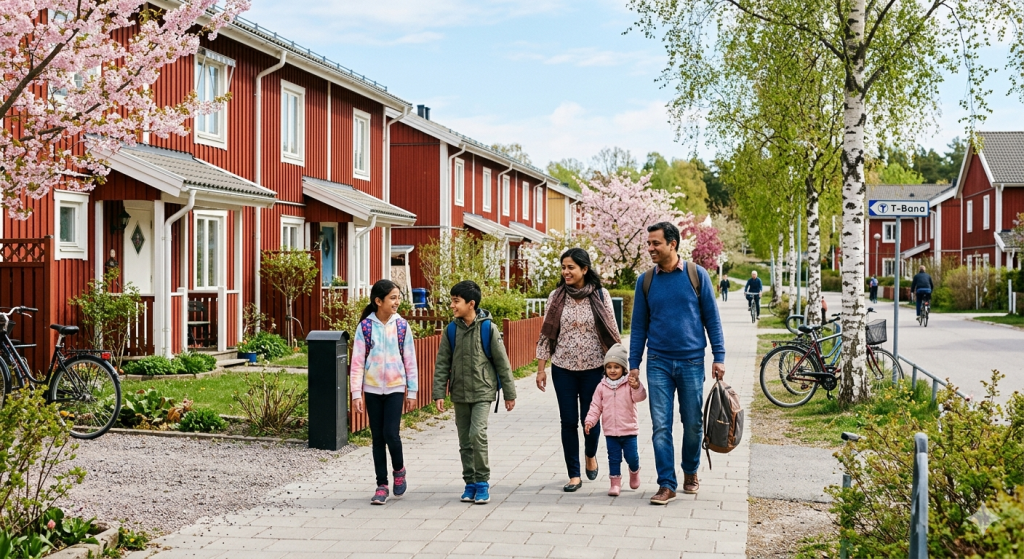
Sweden’s renowned welfare system is facing a major overhaul. The government, together with the Sweden Democrats, has officially unveiled plans to fundamentally change how newly arrived immigrants access state benefits.
The core principle is simple: people should work and pay taxes before gaining access to certain welfare benefits, rather than receiving them immediately upon arrival.
The changes are scheduled to take effect on January 1, 2027, and represent one of the most significant reforms of Sweden’s social welfare system in decades.
The End of Immediate Access to Benefits
Under the current system, individuals who receive a legal residence permit in Sweden gain access to most welfare benefits almost immediately. That is set to change for non-EU citizens.
Under the proposed rules, newcomers will face a five-year qualifying period before becoming eligible for several key state benefits. Unless they have lived in Sweden for at least five years, they will not be entitled to receive:
- Child Benefit (Barnbidrag): Monthly financial support for children, including additional payments for larger families.
- Parental Benefit (Föräldrapenning): The residence-based portion of Sweden’s parental leave compensation.
- Housing Allowance (Bostadsbidrag): Financial assistance designed to help lower-income households cover housing costs.
- Elderly Support (Äldreförsörjningsstöd): Supplemental income support for older immigrants who have not worked long enough in Sweden to qualify for a sufficient pension.
There is one important exception. Under EU coordination rules, periods of residence or work completed in another EU member state may count toward the five-year qualification requirement.
The Fast Track: How to Qualify Earlier
The government says the objective is not simply to restrict access to benefits but to encourage faster integration into the labour market. As a result, the proposal includes pathways that allow individuals to qualify sooner if they establish themselves in employment.
There are two main routes:
- The High-Earning Route: Secure employment with a gross monthly salary exceeding SEK 40,000 and maintain that employment for at least six consecutive months.
- The Employment Route: Work for at least 12 of the previous 24 months while earning a gross monthly salary of approximately SEK 21,000.
Benefit Cap and Mandatory Activity Requirements
To ensure that households do not receive more through welfare than they could earn from entry-level employment, Sweden also plans to introduce a national benefit cap (bidragstak). This would place an upper limit on the total amount of welfare payments a household can receive.
In addition, unemployed individuals who are capable of working will face stricter requirements in order to receive financial assistance (socialbidrag).
Municipalities will be able to require recipients to participate full-time in approved activities, including Swedish language courses (SFI), job-search programmes, employment training, or other integration measures. Failure to participate could result in benefits being reduced or withdrawn.
What Will Not Change?
Despite the tougher rules, the government intends to retain key safety nets.
Emergency financial assistance aimed at preventing severe poverty or homelessness will continue to be available regardless of how long a person has lived in Sweden. Certain disability-related benefits, including support for personal assistance, will also remain exempt from the five-year qualification requirement.
The proposal is expected to generate intense political debate in the coming months. Critics argue that the changes could increase child poverty and social exclusion, while supporters contend that the reforms are necessary to strengthen incentives to work and ensure the long-term sustainability of Sweden’s welfare system.
About The Author